Research Interests
“How do institutional frictions and social norms shape the allocation of human capital and the returns to it?”
I am particularly interested in how institutions and social norms shape women’s education, career, and family decisions over the life cycle. My current work focuses on gender disparities in scientific credit, recognition, and knowledge production, while I am also exploring related questions in labor markets, organizations, and family economics.
More broadly, I am interested in understanding to what extent observed differences in individual choices and outcomes reflect underlying preferences and productivity, and to what extent they reflect institutional and social constraints on how talent is allocated, evaluated, and rewarded.
Research Questions
1. 🔍 Labor Supply & Career Persistence
How do workplace institutions, caregiving responsibilities, and family constraints shape labor-force participation and career trajectories?
2. ⚖️ Allocation & Recognition
How are talent, tasks, credit, and rewards allocated within organizations and labor markets, and when do distortions in these processes affect incentives and productivity?
3. 📜 Norms & Life-Cycle Decisions
How do social norms and gender expectations interact with economic incentives to shape education, career, location, marriage, and fertility decisions?
Selected Research Projects
Ongoing Projects
1. Gender and Academic Credit Allocation
Status: Work in Progress (Jan. 2026 – Present)
-
Overview:
This project investigates whether female scientists systematically receive lower measured academic credit than male peers in scientific production. -
Preliminary Empirical Findings:
- Gender Gap Across Team Sizes (Figures 1 & 2): Across author team sizes ranging from 2 to 20, female authors have lower average credit scores than male authors in unconditional between-paper comparisons (Figure 1). A similar gender gap remains when comparisons are restricted to co-authors within the same paper (Figure 2).
- Persistence Over Time (Figures 3 & 4): Across 5-year cohorts from 1950 to 2024, the gender gap in measured credit is visible in both between-paper comparisons (Figure 3) and within-paper co-author comparisons (Figure 4), suggesting that the pattern is not confined to recent cohorts.
- Robustness Across Specifications (Figure 5): The estimated gender difference remains negative and statistically significant across specifications ranging from bivariate OLS to models incorporating paper-level controls, author career trajectories, year and field fixed effects, and paper fixed effects.
📊 View Preliminary Empirical Results
Disparity Across Team Sizes (2–20 Authors)
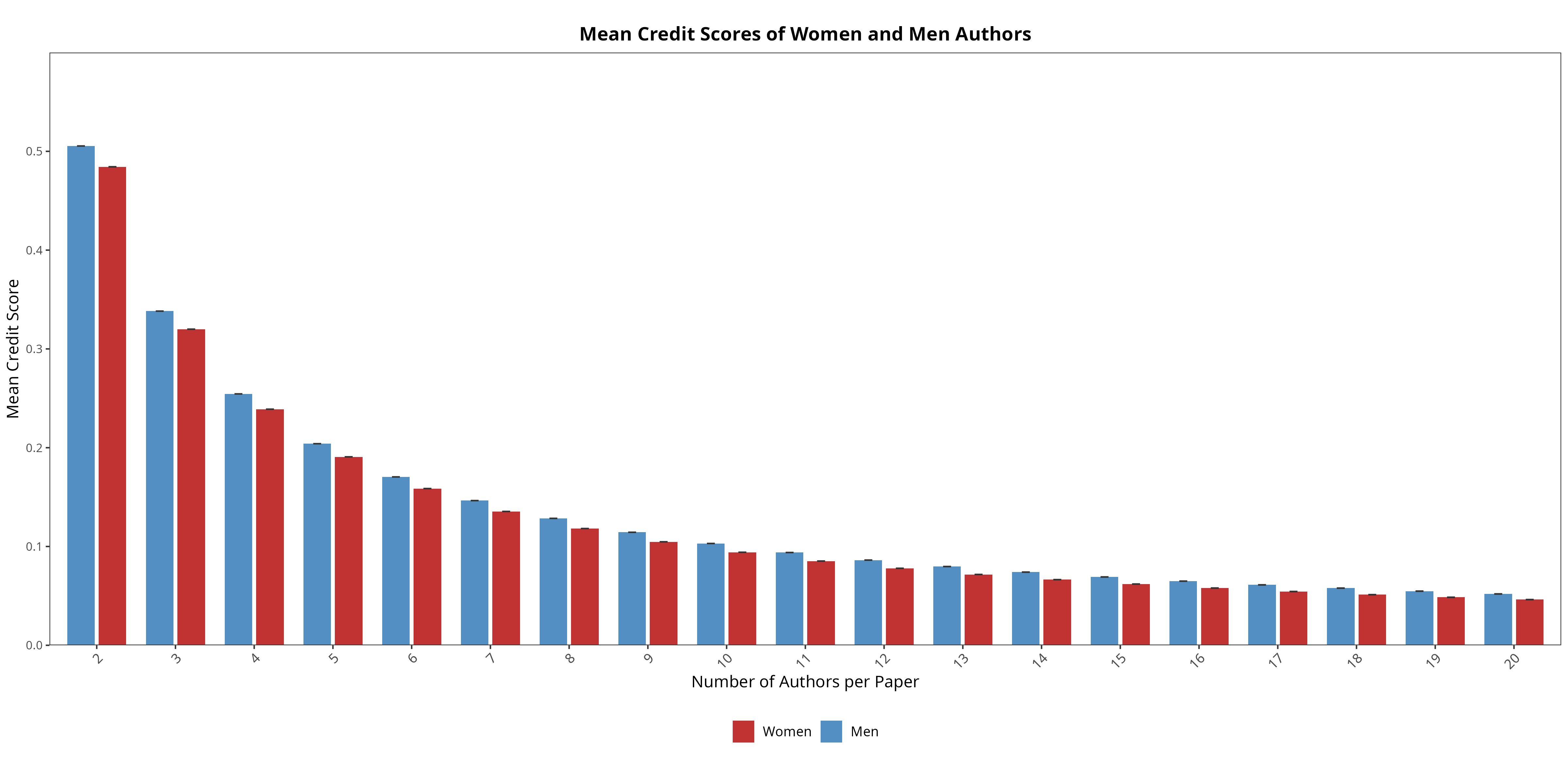
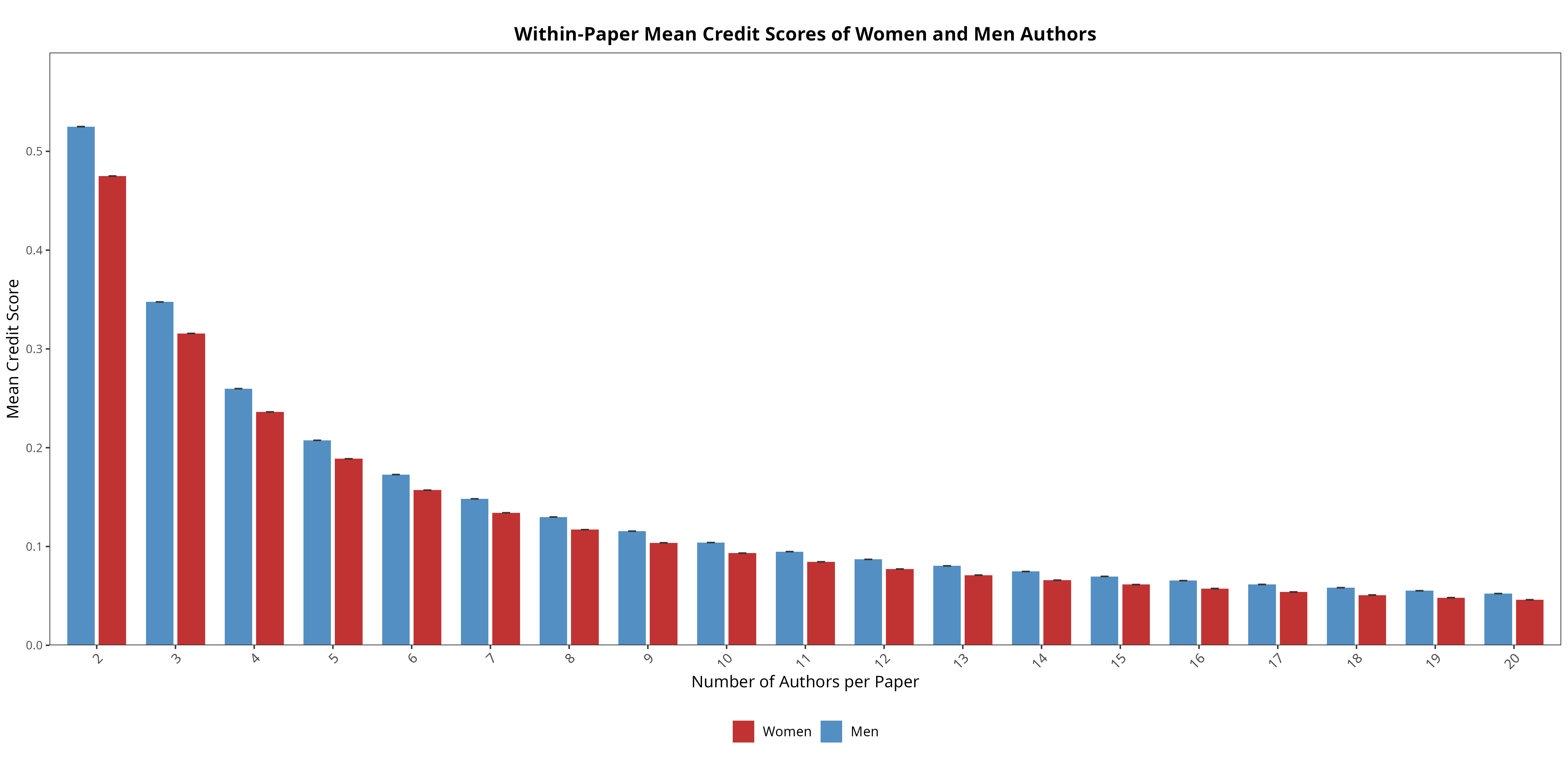
Left (Figure 1): Between-paper credit scores by team size. Right (Figure 2): Within-paper credit scores by team size.
70-Year Temporal Evolution (1950–2024)
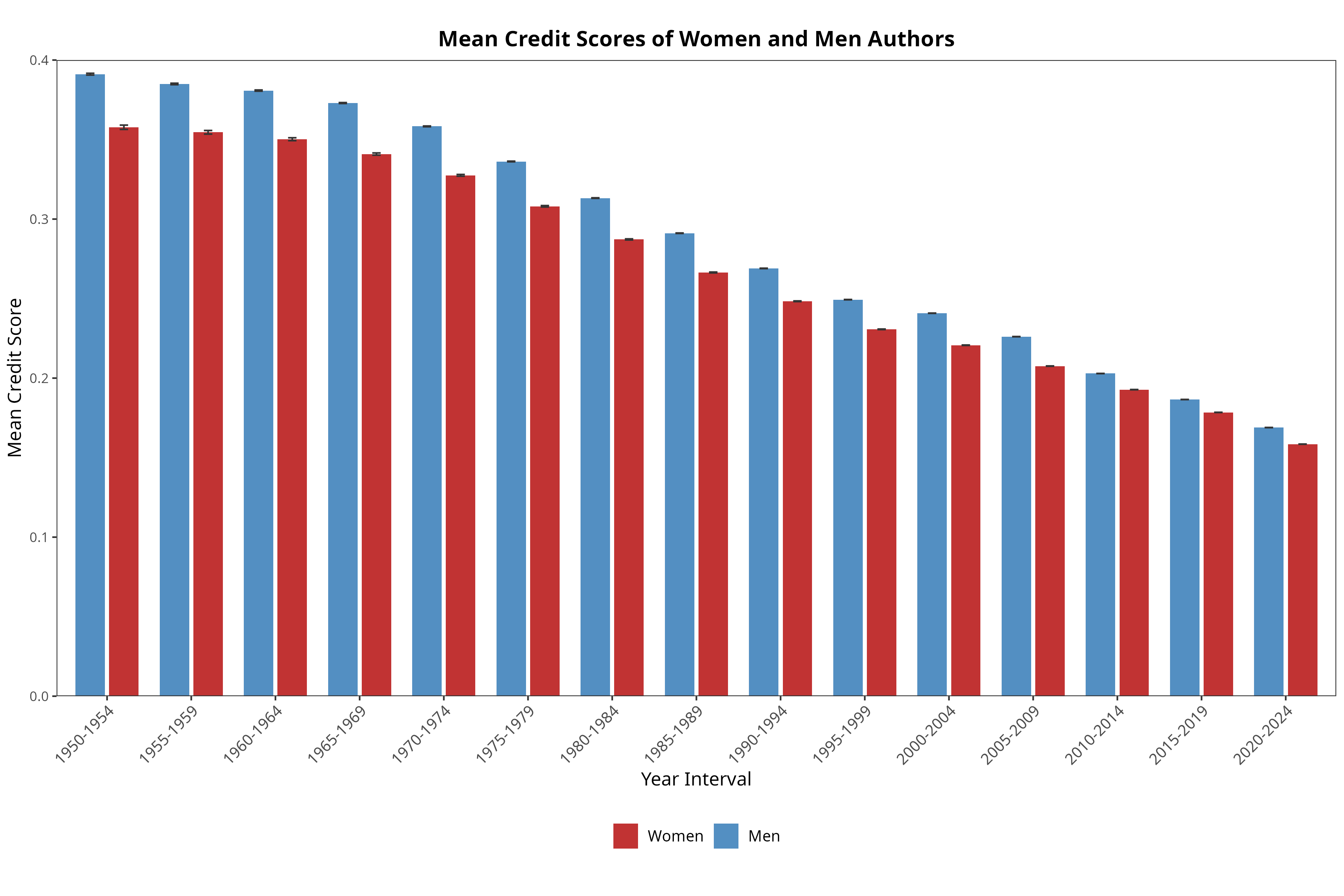
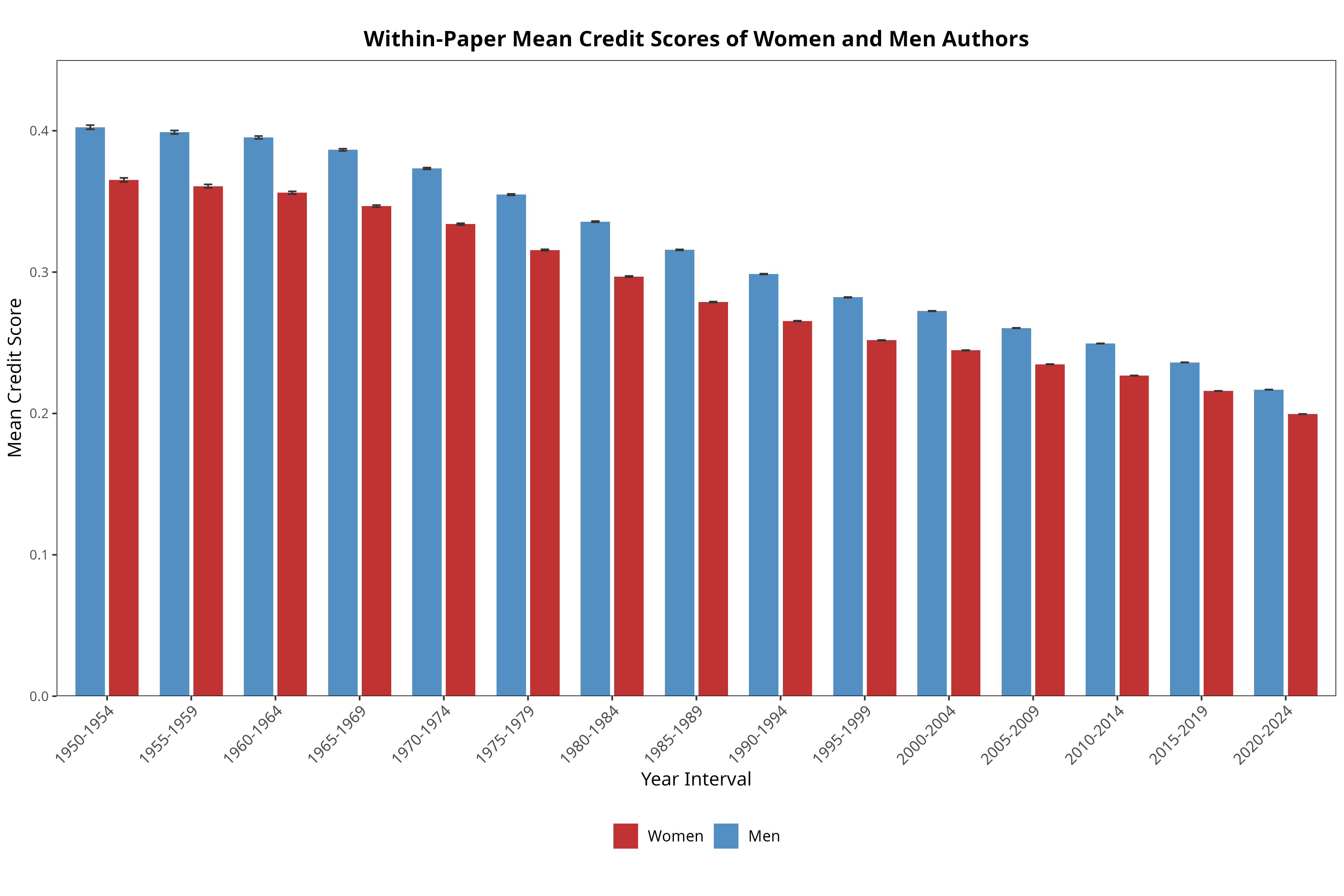
Left (Figure 3): Between-paper credit scores across 5-year intervals. Right (Figure 4): Within-paper credit scores across 5-year intervals.
Econometric Analysis
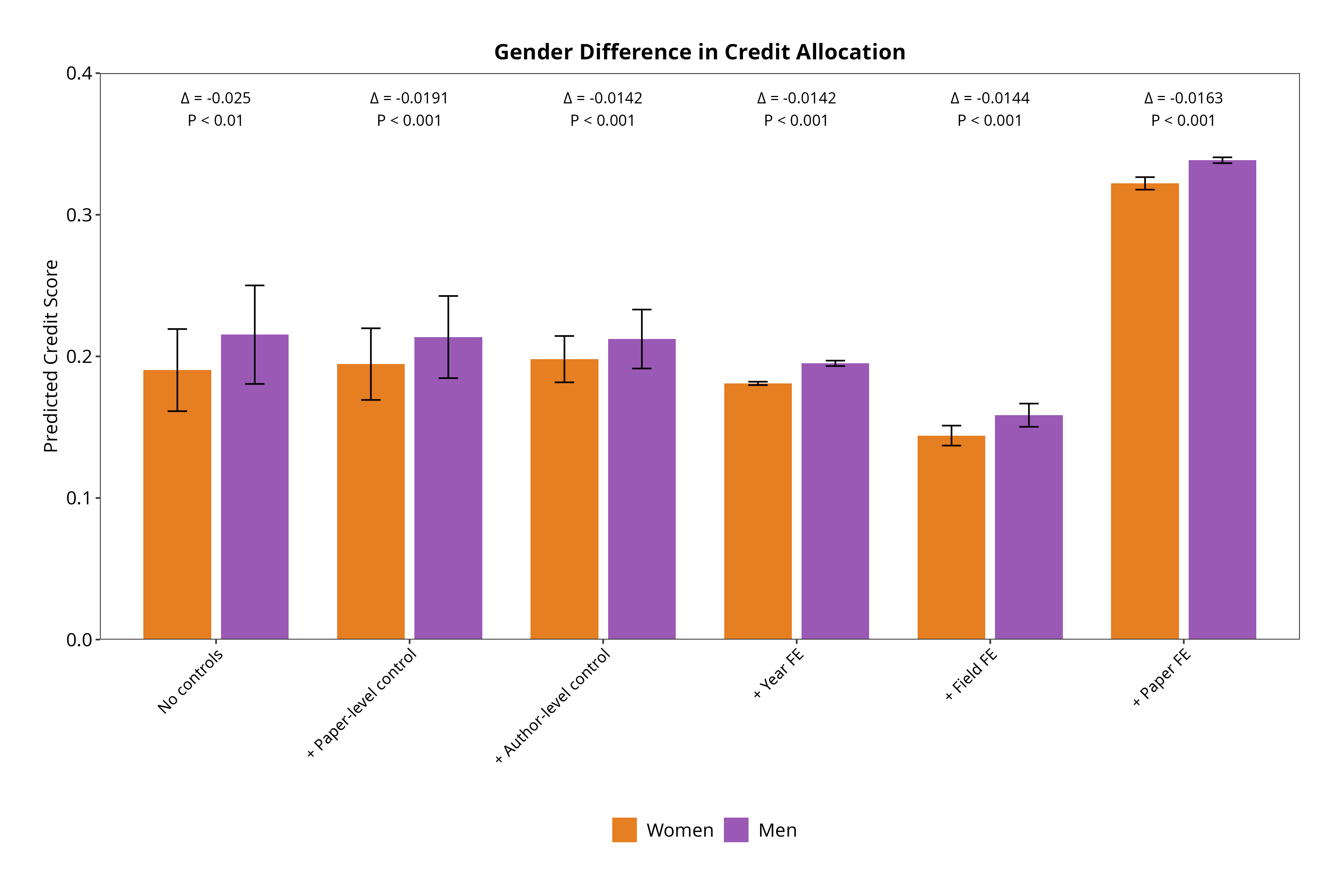
Figure 5: Gender differences in credit allocation.
2. Whose Economics? Gender Composition, Perspective Differentiation, and Complementarity in Economic Knowledge Production
Status: Research Proposal
Economic phenomena generate research questions, but they do not uniquely determine how those questions are understood. This project asks whether economists with different gendered social and institutional experiences systematically frame comparable gender-related economic phenomena differently, and whether such differences may become complementary in collaboration. I am exploring a framework in which heterogeneous experiences generate differences in the economic mechanisms researchers perceive as salient. Using gender-related articles published in the Top Five economics journals from 2000 to 2025, the proposed empirical design would compare the framing of closely related research questions across male and female authors, with particular attention to solo-authored work. I also plan to construct authors’ pre-collaboration perspective profiles to examine whether mixed-gender teams combine more distant analytical perspectives and whether such ex ante heterogeneity is associated with greater conceptual recombination. More broadly, the project asks whether diversity in knowledge production operates not only through differentiated technical expertise, but also through heterogeneity in the analytical perspectives researchers bring to scientific inquiry.
3. Bridging Recognition? Women-Focused Scientific Awards and the Allocation of Scientific Prestige
Status: Research Proposal
Women-focused scientific awards are intended to recognize female scientists who may be underrepresented in mainstream prestige systems, but their downstream effects remain unclear. This project asks whether receiving a major women-focused scientific award increases the probability of, or accelerates the timing of, subsequent recognition by higher-prestige, gender-neutral awards. I am interested in a mechanism in which scientific quality is imperfectly observed and evaluative attention is costly, so targeted awards may affect later recognition through certification or increased visibility. Empirically, I plan to use risk-set matching to compare recipients with observationally similar women who have not yet received the award, balancing on pre-award scientific and career trajectories. I also plan to use official award citations to examine whether subsequent mainstream recognition concerns contributions made before the targeted award or later scientific output, helping distinguish recognition-based mechanisms from broader career and productivity pathways.